
Let’s be honest. Most accounting firm websites are built to inform, not convert. They explain services. They list credentials. They look professional. But they don’t always turn visitors into leads.
If your landing page is not generating inquiries, downloads, or booked calls, the issue is usually not traffic. It is structure, clarity, and focus.
The good news?
Small changes can make a big difference.
Why Landing Pages Matter More Than Ever
Today’s prospects are doing their homework before they reach out. They’re researching, comparing, scanning, and deciding quickly.
Research shows that many users decide in just a few seconds, and a large percentage never scroll past the top of the page.
That means your landing page has one job: Make it instantly clear why someone should take the next step.
One page. One goal. One action.
The Structure That Drives Conversions
When someone lands on your page, you have to answer one question: “Is this for me?”
The P.R.O.P.S. framework (Problem, Result, Objection Removal, Proof, and Simple CTA) helps you do exactly that by guiding your visitor from interest to action naturally, without confusion.
Download the Landing Page Checklist for Accounting Firms.
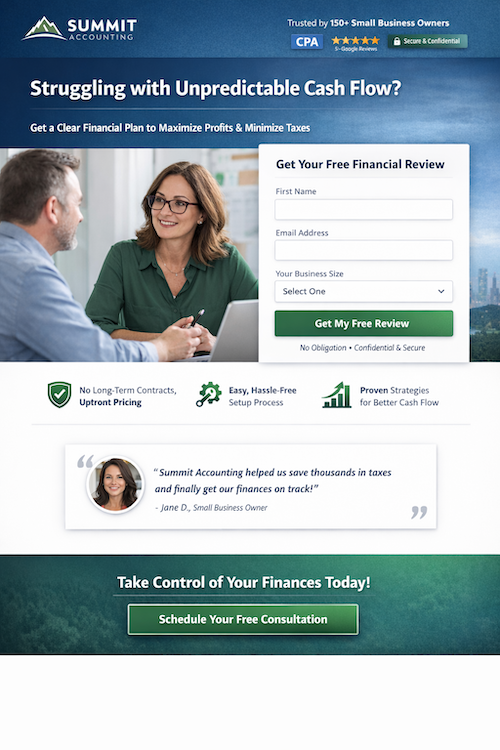
Problem: Speak to What’s Keeping Them Up at Night
Start by showing you understand their situation better than anyone else. If they feel understood, they will keep reading.
Your visitor isn’t thinking, “I need accounting services.” They’re thinking things like:
- “Why am I working harder but not making more money?”
- “Am I missing something with my taxes?”
- “Why does my cash flow feel all over the place?”
Your headline should reflect that reality immediately.
Result: Show Them What Better Looks Like
Once you have their attention, paint a clear picture of the outcome.
Not your process. Not your features. The result. This is where your value becomes real to them, like:
- More predictable cash flow.
- Fewer tax surprises.
- A clearer financial path forward.
Objection Removal: Clear the Doubts Before They Ask
Even interested prospects hesitate. When you remove friction, you make saying “yes” easier. They’re wondering:
- “Is this going to cost more than it’s worth?”
- “Is switching going to be a headache?”
- “Will this actually work for a business like mine?”
The best landing pages don’t ignore those thoughts. They answer them upfront. A few simple reassurances can make a big difference:
- Clear, upfront pricing.
- A smooth onboarding process.
- Experience working with similar clients.
Proof: Build Trust Quickly
Before someone shares their information, they need to trust you. This doesn’t require a long story. Just a few strong signals, like a:
- Short client quote.
- Quick mention of your experience.
- Real result that you’ve helped someone achieve.
Example: “Trusted by 150+ small business owners to improve cash flow and reduce tax burden.”
Simple CTA: Make the Next Step Obvious
Now that they are interested and confident, give them one clear action:
- “Schedule Your Free Consultation”
- “Download the Tax Planning Checklist”
- “Get Your Financial Snapshot”
Keep the form short. Keep the button visible.
Keep the message clear.
Bringing It All Together
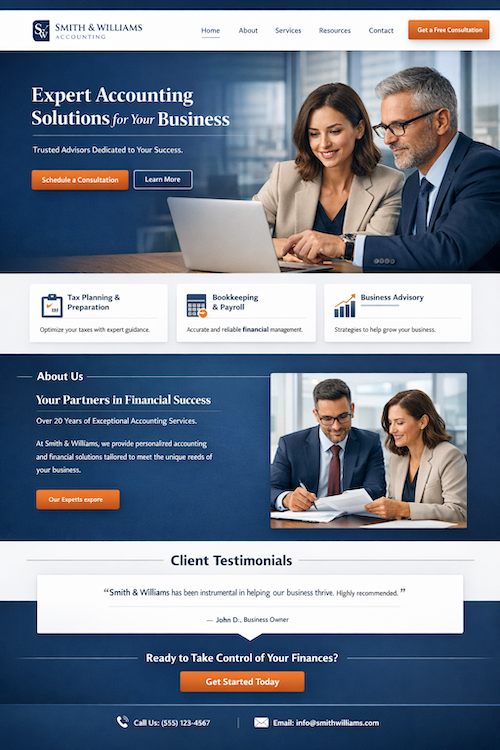
A high-performing landing page is not about design trends or fancy language. It’s about:
- Putting your best message at the top. Most people won’t scroll.
- Keeping your writing easy to skim. Short paragraphs help.
- Using real images when you can. They feel more trustworthy.
- Removing distractions. This isn’t your homepage.
- Ensuring it works well on a phone. That’s where many people will see it first.
When you get these fundamentals right, your landing page stops being just another page on your website and becomes a lead-generation tool.
3 Common Landing Page FAQs
1. Do I really need a separate landing page?
Yes. Your homepage serves a broad purpose. A landing page focuses on a specific action, such as downloading a guide or booking a consultation. That focus is what improves conversions.
2. How long should my landing page be?
It depends on the offer. Simple offers (like a checklist) should be short. Higher-value service pages should provide more detail and proof. The goal is not length. It is clarity.
3. What should I ask for on my form?
Every extra field creates friction. Only ask for what you truly need. Less is more. Start with:
- Name
- Maybe one qualifying question, like industry, revenue, or location.
Ready to improve your conversions?
When you structure your landing page this way, you are guiding your ideal client through a decision in a way that feels natural, clear, and easy to act on.
Let’s look at your current landing page and identify quick wins you can implement right away. Contact us today.